Call and Tell Us What You See
Drips, stains, or shingles on the lawn. We listen first and ask a few quick questions.
A metal roof can shrug off a lot, but it is not leak-proof. When a fastener backs out, a washer cracks, or a seam opens up, water finds its way in. We find the real entry point on your metal roof and fix it right, so the drip stops for good.
Call and tell us what is happening and a local dispatcher will confirm the next step.
Call Now +1 (409) 683-9218 → No spam. No obligation. Just practical help.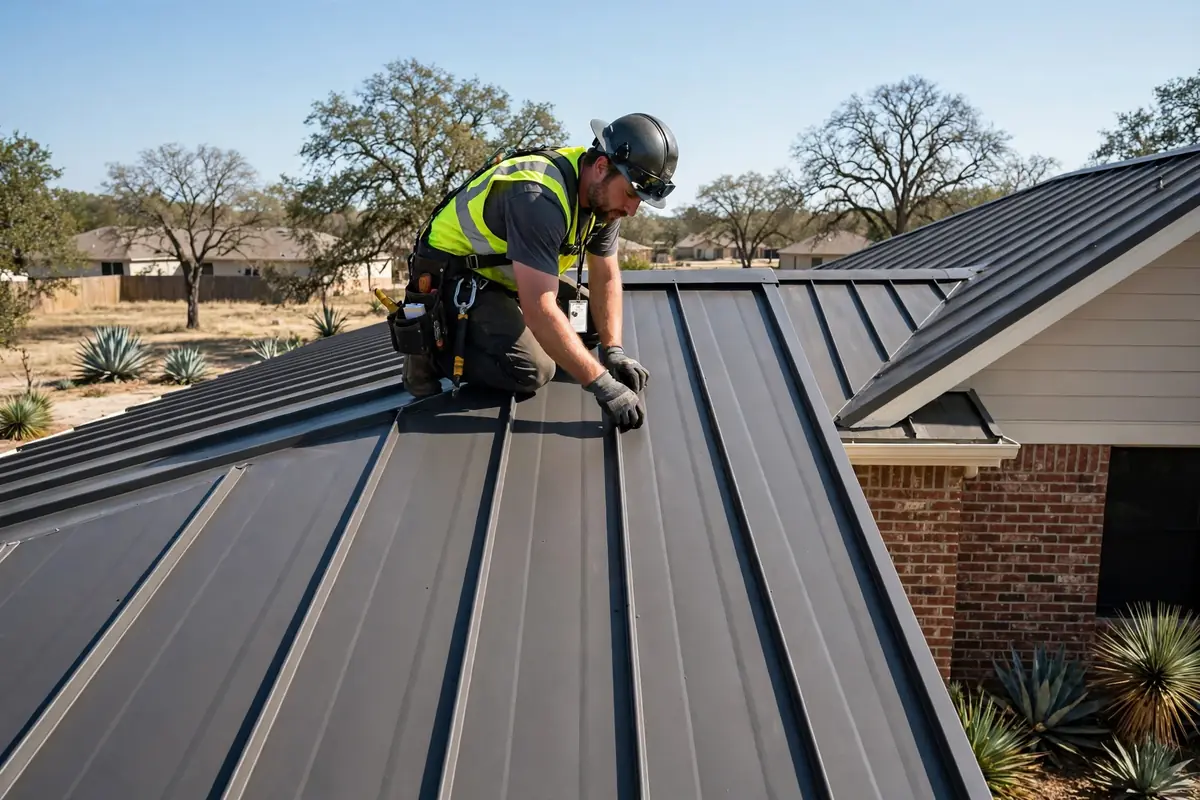
Your metal roof may look solid from the driveway and still let water in. Along the Texas Gulf Coast, heat, humidity, and salt air wear down screws, washers, and sealants faster than most owners expect. Water then runs along a seam or a screw line and drops into your attic far from where it entered.
That is why we never just patch the stain. We walk the roof and inspect fasteners and seams up the slope from the leak, plus every vent, chimney, and flashing point. Once we know the true entry point, we explain the fix in plain terms and let you decide. Homes in Grand Cay Harbour, Heron's Landing, and Sunrise Cove take a beating from coastal weather, and we know exactly what that does to metal roofs.
A spreading water stain is stressful. One call and you will know exactly what is going on.
Drips, stains, or shingles on the lawn. We listen first and ask a few quick questions.
We check the roof and track the true entry point. No talk of repairs until we know the cause.
A clear explanation and your repair choices in plain words. No work starts until you approve it.
Fast response, clear communication, and no pressure. Tell us what is happening.
Call now →We start at the leak inside your home and work up the roof from there, because the entry point is rarely right above the stain.
We check for loose, backed-out, or missing screws and cracked rubber washers. On screw-down roofs, a failed washer lets rain follow the screw straight into the deck below.
Standing seam and overlap seams are checked for gaps, lifted edges, and dried sealant. Heat and high wind can open small gaps that grow larger over time.
Ridges, valleys, chimneys, vents, and pipe boots get a close look. Most metal roof leaks start where the roof meets something else, not in the middle of a panel.
Salt air near Galveston Bay wears coatings thin. We spot early rust and thin spots so they can be treated before they turn into holes.
We listen to what you are seeing, where the water shows up, and when the problem started.
We inspect the roof from the leak point upward, checking seams, fasteners, flashing, and likely entry points.
You get a plain-English rundown of what we found and the practical ways to fix it, with no pressure.
Approved work is done with materials suited to your roof type and our Gulf Coast weather.
We review the repair, clean up the work area, and tell you what to watch for down the road.
The right checks keep us from patching the wrong spot on your metal roof.
We inspect seams, screw lines, and hidden fasteners for gaps, lift, and wear that can let water slip under the panels.
Interior stains are traced back up the roof slope to find where water actually enters, not just where it drips into your home.
Old sealant is checked for cracking and pullback, and flashing joints are tested for movement after storms like Ike and Harvey.
Replacement panels and screws are matched to your roof so the repair blends in and seals tight against wind-driven rain.
A ceiling stain shows up in one room, but the water entered through a failed fastener two panels away. Patching the ceiling alone fixes nothing, because the roof keeps leaking.
We trace the water path up the slope and fix the real entry point, so the stain does not come back after the next rain.
Heat cycles push screws out a little more each summer, and cracked washers let rain follow each screw into the deck. You may see rust streaks below screw lines or damp spots in the attic.
We refasten loose screws, replace worn washers, and reseal the screw lines that need it, then check the surrounding seams for related damage.
Salt air and humidity near Galveston Bay wear coatings thin. Rust starts in the spots where water sits longest, and it spreads quietly under the coating before it breaks through.
We treat early rust spots, reseal the affected area, and explain your coating options so the roof stays protected going forward.
A small drip can stain ceilings and soak insulation faster than you think. These signs deserve a closer look before the next big rain.
Ask a pro →Brown rings or damp spots often appear far from the real entry point on a metal roof, because water travels along seams and screw lines first.
Even a slow drip means water is getting past the surface. It keeps damaging insulation and drywall until the entry point is fixed.
Visible rust, lifted edges, and backed-out screws are open doors for wind-driven rain. Each storm makes them worse.
Yes. Metal is strong, but the fasteners, seams, and flashing can wear out over time. On the Gulf Coast, heat, humidity, and salt air speed up that wear. Most metal roof leaks come from small failures at seams, screws, or edges, not from the panels themselves.
Standing seam roofs hide their fasteners, so leaks usually start where the roof meets something else: chimneys, vents, skylights, and ridge caps. Sealant can dry out, flashing can shift in high winds, and panels expand and contract in the heat, which can open small gaps over time.
Yes. On screw-down metal roofs, each screw has a rubber washer that seals the hole. Sun and heat dry those washers out until they crack. When a washer fails, water can follow the screw into the deck below. Replacing worn washers and refastening loose screws is one of the most common metal roof repairs.
We start inside, checking where the water shows, then work up the slope from there. Water can travel along a panel seam or a fastener line before it drops, so the entry point is often higher than the stain. We check seams, fasteners, flashing, and any place the roof was cut or patched.
It depends on the condition of the roof. If the panels are solid and the leaks come from a few failed fasteners or seals, a targeted repair is usually enough. If the roof has wide rust, many failed fasteners, or worn-out coatings across large areas, a full recoat or a deeper repair plan may make more sense. We explain both options after the inspection.
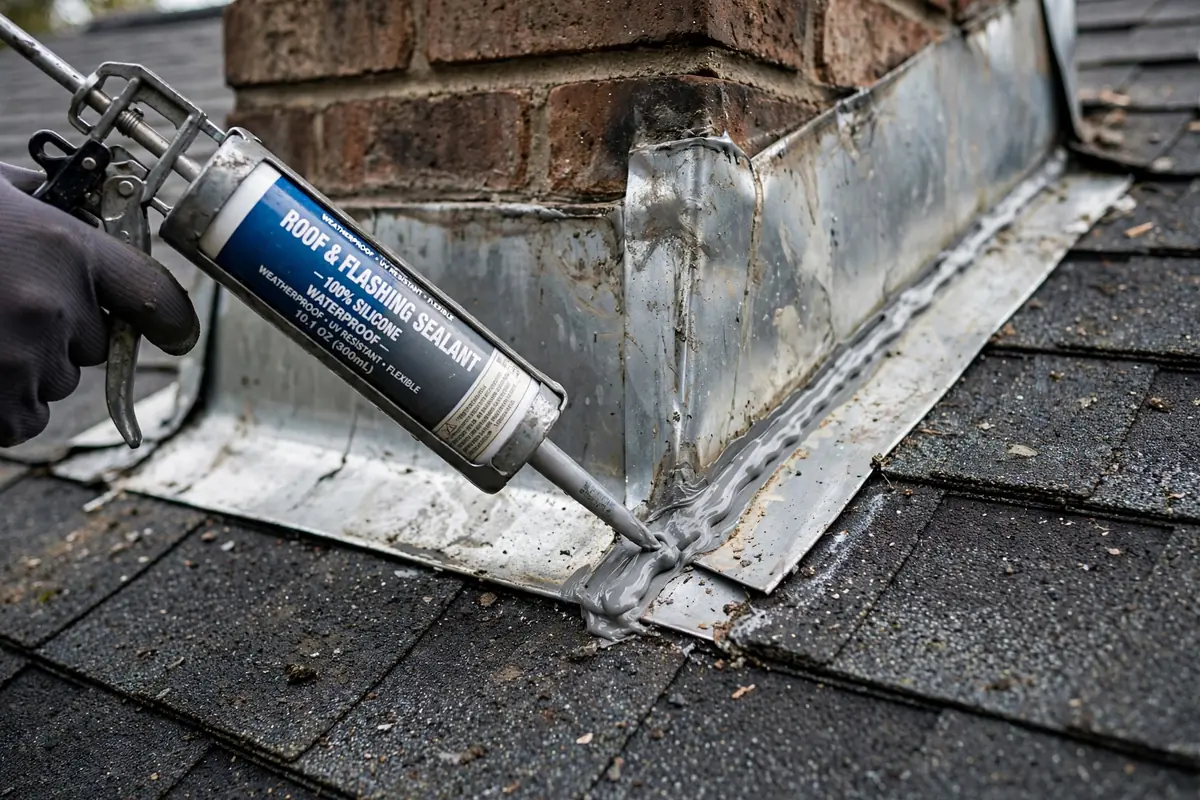 Roof Flashing RepairFlashing is where most roof leaks start. We repair and reseal flashing at chimneys, vents, valleys, and skylights so those joints stay watertight through Gulf Coast storms.Explore →
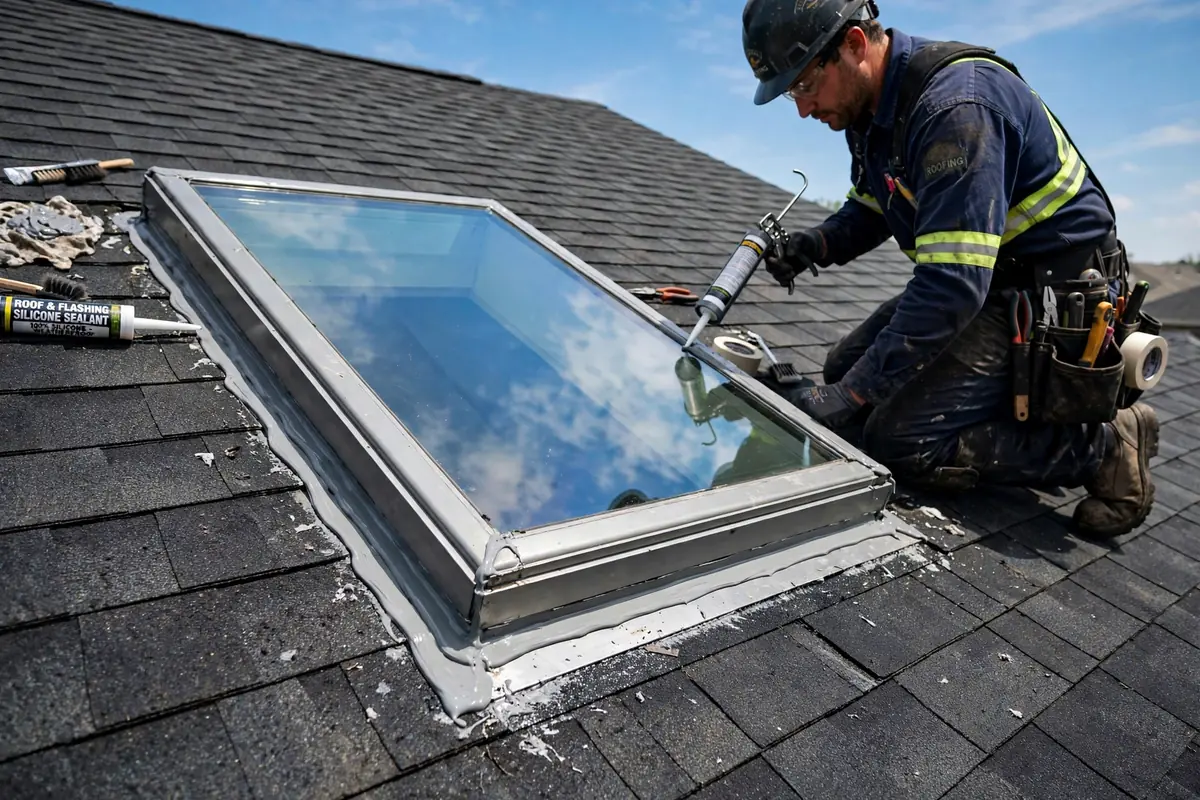 Skylight Leak RepairDrips and stains around a skylight usually mean worn seals or loose curb flashing. We reseal the unit and test it, so the light stays in and the water stays out.Explore →
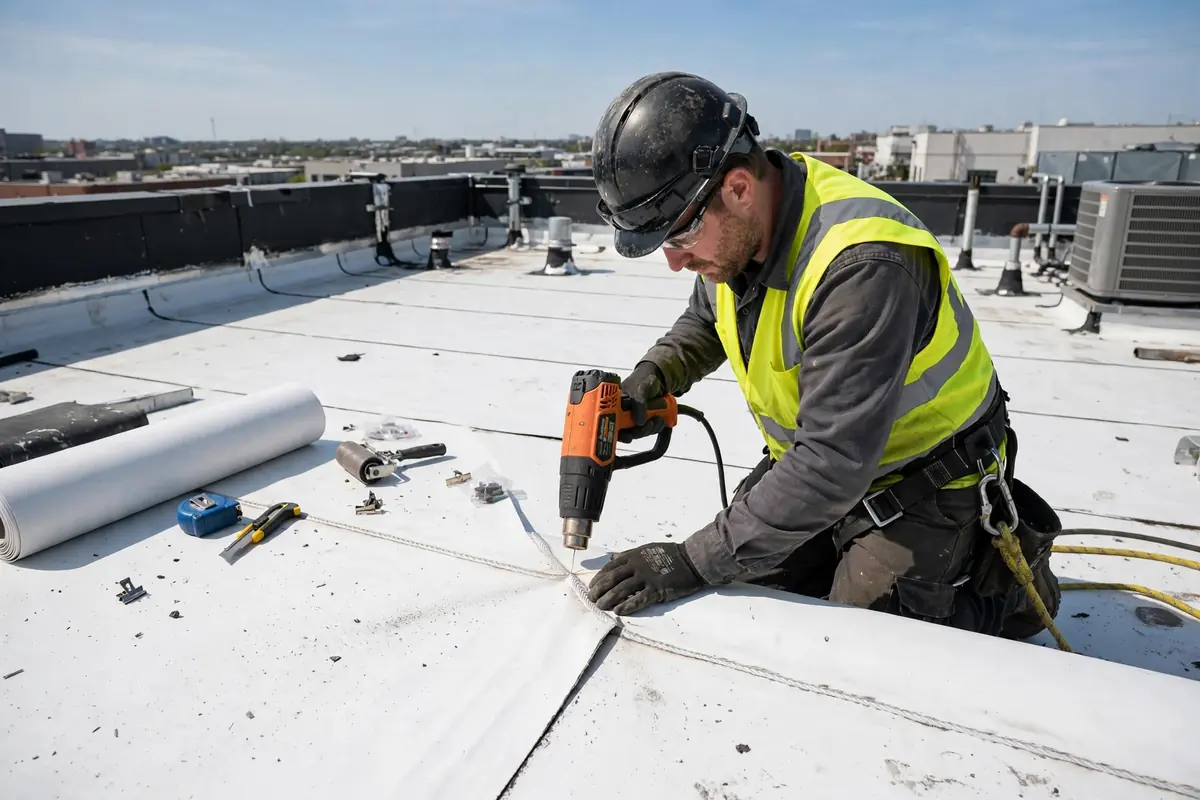 Flat Roof & TPO RepairPonding water, split seams, and punctures are common on low-slope roofs. We patch and re-weld TPO membranes so your flat roof holds water out again.Explore →
Contact Texas City Roof Leak Repair to talk through your metal roof problem and set up metal roof leak repair in Texas City, TX. We will start with what you are seeing and help you decide the right next step.
Book Now +1 (409) 683-9218 →Tell us what you are seeing, where the leak shows up, and what kind of roof you have. We will confirm the next step and set up a time that works for you.
Back to the roof leak repair Texas City home page.